Gutter Problems That Quietly Damage Geelong Homes
Guttering is the least glamorous part of a roof and the most common source of hidden water damage. What to look for and when it becomes urgent.
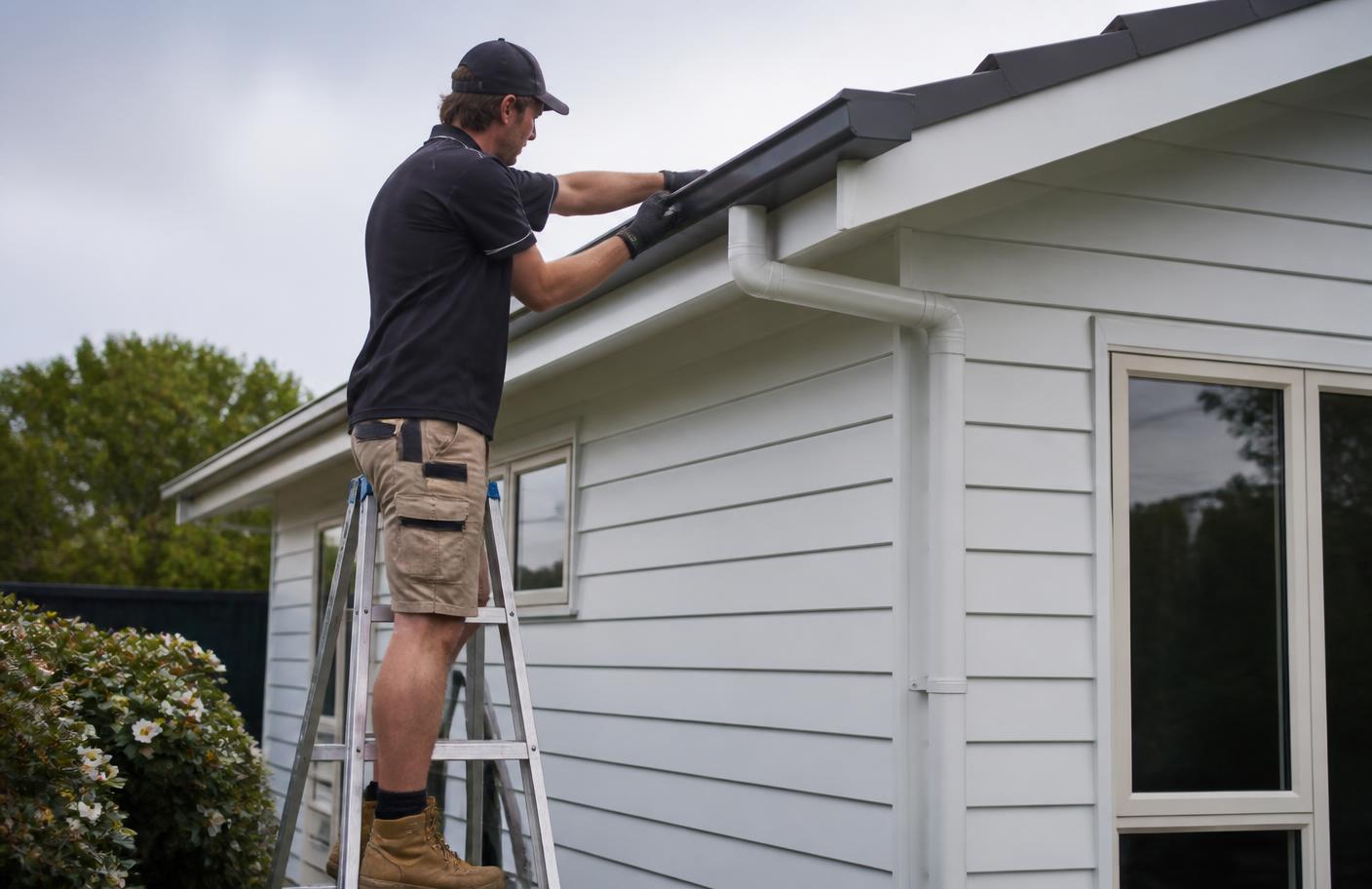
Gutter replacement in Geelong matters more than its unglamorous reputation suggests. A gutter that has rusted through, sagged out of fall or pulled away from the fascia sends water down the wall, into the eaves and against the foundations rather than into the downpipe. By the time a homeowner notices, the damage is usually to the fascia and eaves lining rather than the gutter itself. We travel to your property, inspect the full run including brackets, joints, stop-ends and downpipes, and quote replacement in writing with a fixed price.
Free inspection • No call-out fee • Written fixed-price quote
Gutter replacement in Geelong matters more than its unglamorous reputation suggests. A gutter that has rusted through, sagged out of fall or pulled away from the fascia sends water down the wall, into the eaves and against the foundations rather than into the downpipe. By the time a homeowner notices, the damage is usually to the fascia and eaves lining rather than the gutter itself. We travel to your property, inspect the full run including brackets, joints, stop-ends and downpipes, and quote replacement in writing with a fixed price.
Two Geelong conditions drive most gutter replacement. Salt-carrying wind off the bay corrodes steel from the inside where damp debris sits, which is why properties in Drumcondra and Rippleside go first. Heavy tree canopy does the same job differently — leaf litter in the shaded streets of Newtown holds moisture against the steel all winter and packs the fall until water sits permanently in the run.
Start with a free inspection from Roof Repair Geelong, or contact us if you want to discuss the signs you have noticed before booking.
Call Now +61 7 4428 2846A gutter replacement quote covers the whole water path from the roof edge to the ground.
Gutter work does not include underground stormwater repair or replacement, structural rafter repair, roof covering replacement, wall or eaves painting, or electrical work around downpipe-mounted fittings. Anything we find in those categories is documented and pointed out so you can arrange the right trade.
Water running down the fascia rather than over the front lip means the gutter is either blocked, out of fall or has pulled away from the fascia. This is the pattern that quietly rots eaves and fascia timbers.
Joints and stop-ends hold moisture and debris longest, so they corrode first. Orange staining below a joint means water is already escaping there.
A dipped section holds standing water permanently. Standing water accelerates corrosion and breeds mosquitoes, and once the sag is established the fall is gone for that whole run.
If something is growing up there, the gutter has enough accumulated organic matter and constant moisture to support it. The steel underneath has been wet for a very long time.
Persistent damp on an external wall directly beneath the gutter is water escaping the system. Left alone it moves inward to the wall cavity and internal linings.
We inspect the whole gutter run rather than the section you have noticed: brackets, joints, fall, stop-ends, outlets and downpipes, plus the fascia condition behind it.
We confirm the gutter profile and colour, whether downpipes and gutter guard are included, and whether any fascia needs attention before new gutter goes on.
Old guttering comes off and the fascia is inspected while it is exposed — the only time it can be properly assessed. Anything found is photographed and discussed before new material goes up.
New gutter is installed with correct fall to the outlets and brackets at appropriate spacing for the span, with joints and mitres properly sealed.
We run water through the new system to confirm fall and check for leaks at joints and outlets, then remove all old material from site.
A leaking gutter does not automatically need complete replacement. A sound run may only need a joint resealed, brackets renewed or the fall corrected. Replacement becomes more sensible when corrosion is widespread, the profile is undersized for the catchment, multiple joints have failed or the back edge has damaged the fascia. We inspect the whole drainage path—from roof valleys to outlets and downpipes—because replacing one visible section will not solve overflow caused elsewhere.
Hail can leave dents that are cosmetic, but it can also split metal, loosen brackets and distort laps. Heavy summer rain then exposes the weakness quickly as water overtops or escapes behind the gutter. Leaf loading is another factor in Newtown and Manifold Heights, while salt exposure around Rippleside and Drumcondra can accelerate corrosion at cut ends and fixings. The quote identifies repairable sections, replacement runs and any drainage constraint that needs attention.
Gutter replacement is priced mainly on linear metres, but the things that move the number are the details: how many corners and downpipes the run has, whether it is single or two-storey, whether the fascia needs repair once the old gutter is off, and whether you add gutter guard. Two-storey work costs more because of access and safety, not because the gutter is different. We measure the full run on site, allow for the fittings, and give you a written fixed price for the described scope.
Free on-site inspection, written fixed-price quote — no obligation.
Guttering looks like a simple like-for-like swap, which is exactly why these questions matter.
You cannot see fascia condition until the gutter is off. The right answer is that it is photographed and quoted as a variation for your approval — not capped over quietly so the new gutter has nothing sound to fix to.
Fall toward the outlets is what makes a gutter work. Ask how it is set and confirm that the finished system is water-tested before the crew leaves.
Under heavy tree canopy it genuinely reduces blockages. On an open block with no overhanging trees it adds cost for limited benefit. A contractor who recommends it everywhere is selling, not advising.
Removing the old gutter exposes the fascia for the first time in decades. We photograph what is behind there and raise it before fitting new material onto failing timber.
Every completed run is tested with water before we leave. A gutter that looks level and does not drain is a gutter you will call someone about again.
For bayside properties we specify with salt exposure in mind. Standard fittings in a salt environment fail early, and replacing them twice costs more than specifying correctly once.
We suggest guard where tree load justifies it and say so plainly where it does not. It is an add-on, not a default line item.
Old guttering and fittings leave with us. You should not be left with a pile of rusted steel beside the driveway.
Hail hits gutters harder than most homeowners realise, because a gutter presents a flat, thin, unsupported surface to a falling stone. Direct impact dents the base and can split the steel along a dent line, while stones landing on the roof and washing into the gutter at speed strike the run end-on. Severe hail also loosens brackets by shocking the whole run, so a gutter can look intact and still be sitting a few millimetres lower than it was, which is enough to kill the fall. The heavy downpours that follow a summer hailstorm in Geelong then overload the compromised system immediately — which is why gutter failure so often shows up in the days after a storm rather than during it. After any severe event it is worth having the gutters checked along with the roof, and we include them in every post-storm inspection.
During rain, observe where water first escapes: over the front edge, behind the gutter, through a joint or around a downpipe connection. From the ground, look for sagging lines, rust streaks, peeling fascia paint and washout beneath outlets. Avoid ladders in wet weather. A short video taken safely from a window or doorway can help us understand the flow pattern.
We repair and replace gutters throughout Geelong West, East Geelong, South Geelong, Drumcondra, Newtown, Thomson, Manifold Heights, Rippleside, Belmont and Breakwater, with no travel fees within the region. Bay-facing suburbs can see earlier corrosion at joints and brackets, leafy established streets experience heavier debris loads, and tight inner blocks require careful access planning. After hail, even shallow dents deserve inspection where they distort laps or direct water toward the back edge. We travel to the property, check gutter fall, outlets, downpipes, valleys and visible fascia condition, then provide a written fixed-price scope. Use the suburb links for local roof and drainage context, or visit the service areas hub for the full coverage overview. If your home is just outside the listed suburbs, contact us to confirm scheduling before you make plans. Review every covered location on our Geelong service areas page.
Contact us to confirm availability for a nearby location.
Localised damage — one split section, a failed joint, a few brackets — is repairable and we will quote it that way. Once corrosion appears along multiple sections or the fall has gone across a whole run, replacement is the honest recommendation.
Most single-storey homes are completed in a day. Two-storey properties, long runs or jobs that turn up fascia repairs take longer, and we tell you the expected duration in the written quote.
It depends entirely on tree cover. Under mature canopy it substantially reduces blockages and the work of clearing them. On an open, unshaded block the benefit is much smaller and we will say so.
Yes, across all ten suburbs with no travel fee, including the outer localities. Inspections are free everywhere.
Sudden storm and hail damage is usually covered while gradual corrosion generally is not. We photograph and document what we find and can provide a written report and itemised quote in the format most insurers request. We do not lodge claims on your behalf.
Guttering is the least glamorous part of a roof and the most common source of hidden water damage. What to look for and when it becomes urgent.
Autumn is the best window of the year for roof work in Geelong. What to do while the weather is settled and before the westerlies arrive.

The cheapest storm damage is the damage that never happens. A short checklist for Geelong homeowners before the wild weather arrives.
⚡ Storm or hail damage? Priority response available
Call now or send the form to arrange a free on-site inspection and receive a written fixed price before we touch anything.