Getting Your Geelong Roof Ready for Storm Season
By The Roof Repair Geelong Team · 14 July 2026 · seasonal tips

The cheapest storm damage is the damage that never happens. A short checklist for Geelong homeowners before the wild weather arrives.
Geelong gets its worst roofing weather when strong westerlies coincide with heavy rain. Wind lifts anything already loose, and rain finds every gap that lifting creates. Most of the emergency call-outs we attend after a storm involve defects that were already present and simply had not been tested yet.
Clear the gutters before the rain, not after
A gutter full of leaf litter cannot carry a downpour. Water backs up, spills behind the fascia and runs into the eaves. In tree-lined streets through Newtown and Manifold Heights this is the single most common preventable cause of water damage. Clearing gutters is worth doing before the season, not once the overflow has already started.
Look at the ridge line from the ground
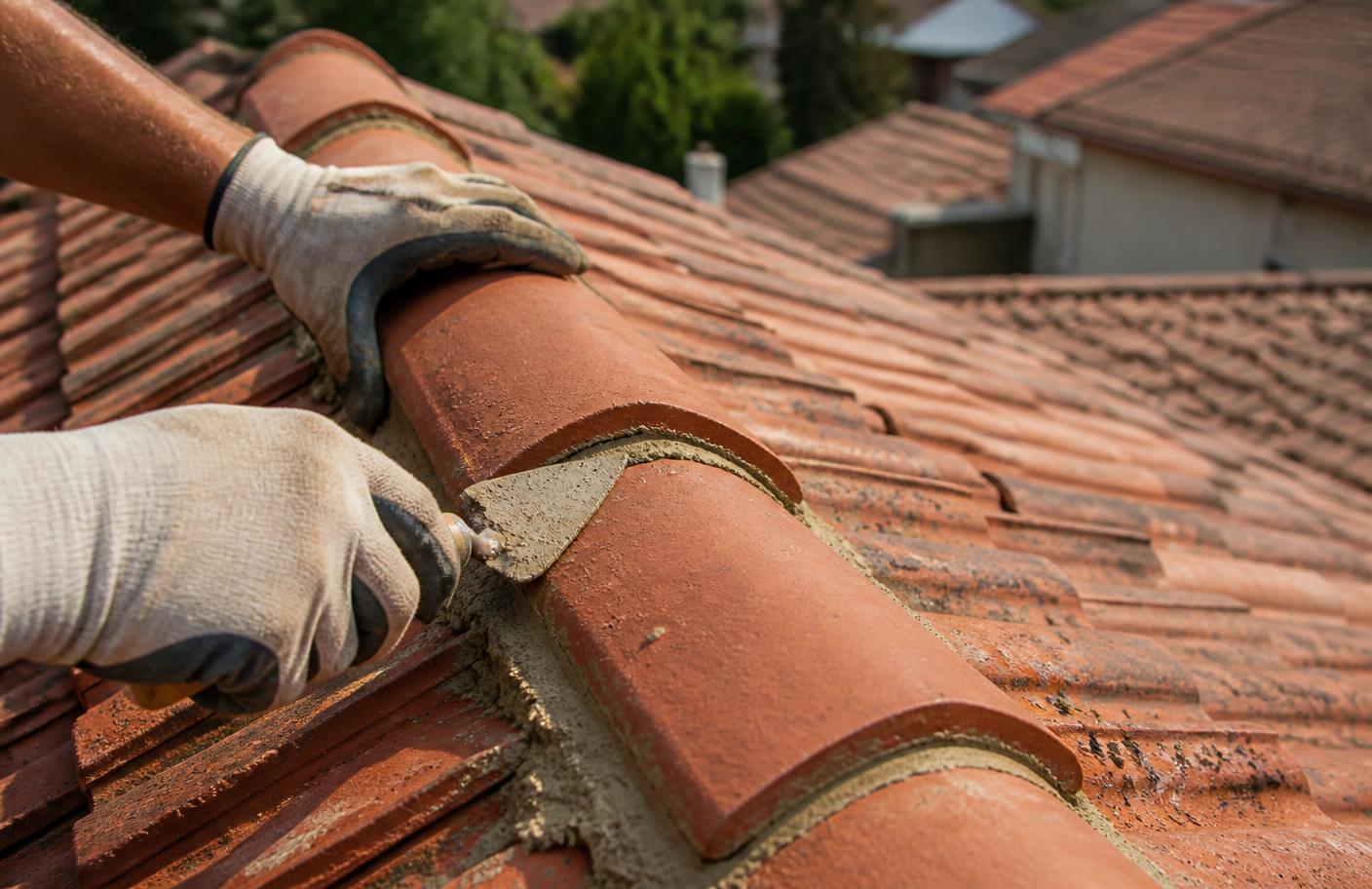
Ridge caps are the first thing wind attacks. From the ground, run your eye along every ridge and hip. Caps that sit unevenly, gaps between caps, or mortar fragments in the gutter below all mean the pointing has failed. Wind gets under a loose cap and takes it, and a missing cap is an open hole in your roof during a storm.
Check the trees
Overhanging limbs do two things: they drop debris into the gutters continuously, and in a storm they scrape or fall on the roof. Any branch sitting over the roof line is worth having an arborist look at before the wind season.
Test your downpipes
Run a hose into each gutter run and watch the downpipe. Slow drainage means a blockage. A downpipe that discharges against the house rather than into stormwater will undermine the ground and cause problems of its own.
Look for lifted or loose sheeting
On metal roofs, wind finds the loose fixing first. From the ground, look for any sheet edge that is not sitting flat and any flashing that has lifted at a corner. On the older metal roofs across Geelong, perished neoprene washers around screws are extremely common and they are a cheap fix compared with the water damage they allow.
Photograph the roof now
Take clear, dated photographs of your roof from several angles while it is in good condition. If a storm does damage it, that before record makes documenting what changed far easier.
Why Geelong storms are harder on roofs than a typical wet-weather event
Geelong's storm risk is shaped by its position on Corio Bay. Fronts that build across Bass Strait and the bay arrive with strong, gusty westerly and south-westerly winds, and those winds carry salt spray well inland into suburbs such as Newcomb, Whittington and even parts of Highton on a rough day. Salt exposure is a slow, cumulative problem — it corrodes exposed metal fixings, ridge capping screws and gutter brackets over years, so a roof that has weathered many mild fronts without issue can still have fixings that are far weaker than they look. Add hail, which Geelong gets periodically through spring and summer storm cells, and you have a combination of wind loading, moisture and impact that tests every weak point on a roof simultaneously rather than one at a time.
How different roof types respond differently in a storm
Postwar concrete tile roofs, common through Bell Park and Norlane, are heavy and generally resist wind uplift well, but their mortar-bedded ridges are the failure point — pointing that has dried out and cracked over a hot summer gives wind an easy way in. Older terracotta tile roofs across Newtown and East Geelong are more brittle, and hail impact or wind-driven debris can crack tiles that then let water through even though the roof still looks intact from the ground. Colorbond re-roofs generally perform well in wind because sheets are mechanically fixed, but their vulnerable points are ridge and barge flashings, and any sheet where a fastener has backed out or corroded away — wind gets under that single point and can peel a much larger area from there.
A practical pre-storm-season checklist
- Clear gutters and check downpipe flow with a hose test rather than assuming a visual clear is enough.
- Walk the boundary of the property and look up at the ridge line and hips for any cap that sits unevenly.
- Check for overhanging branches and have any that sit over the roof line assessed by an arborist.
- Have flashings around chimneys, skylights and vents checked while conditions are still dry enough to reseal them.
- Secure or store anything in the yard that could become airborne debris in a wind event and strike the roof.
- Photograph the roof from several angles so you have a clear before-record.
- Know where your main water shut-off and switchboard are, in case storm water gets into the roof space near either.
What a roofer inspects before storm season
A pre-season inspection focuses on the points most likely to fail under wind load and heavy rain rather than the whole roof generally. That means ridge and hip pointing or fixings, valley condition and clearance, flashing seals at every penetration, gutter and downpipe capacity, and on tiled roofs, any tiles that have slipped, cracked or lost their nib. On older homes, roof space ventilation is also checked, since a roof space that cannot breathe holds moisture longer after a storm and that moisture works on timber and metal fixings from the inside. A written record of this inspection, with photographs, is worth keeping — if storm damage does occur later, it is straightforward to show which defects existed beforehand and which are new.
Common mistakes before and during storm season
The most common mistake is treating gutter clearing as a once-off job rather than an ongoing one through the season, since debris keeps accumulating as wind brings down more material. Another is assuming a metal roof is maintenance-free because it does not have mortar joints — fastener and flashing condition still needs checking. Homeowners also frequently underestimate how much a single loose ridge cap or lifted flashing corner can escalate once a serious front arrives, treating a minor repair as something that can wait, when it is exactly the kind of defect a storm exploits first.
Know what to do during the storm
Do not go outside to look at the roof in high wind. Do not climb up to put a tarp on anything. Move valuables away from any active drip, put a container under it, and photograph what is happening from inside.
Insurance and documentation after a storm
If a storm does cause damage, the quality of your documentation affects how smoothly any insurance claim proceeds. Photograph the damage from multiple angles as soon as it is safe to do so, note the date and approximate time of the storm, and keep any before photographs taken earlier in the season for comparison. A roofer attending storm damage should provide a written assessment describing what happened and why, rather than a verbal description only, since insurers generally want documented evidence of both the cause and the extent of damage. Temporary measures such as tarping should also be photographed and dated, since insurers may ask for evidence that reasonable steps were taken to prevent further damage while permanent repairs were arranged.
After the storm
Walk the perimeter from the ground and photograph anything out of place — displaced tiles, missing caps, lifted flashing, debris on the roof. Note the date and time. Then book an inspection. We prioritise storm damage, make the roof safe, document the damage properly for your records, and quote the permanent repair in writing.
Frequently Asked Questions
How often should Geelong gutters be cleared?
At least twice a year for most homes, and more often where there are established trees overhanging the roof. The key timing is before the wet and windy months, not after the first overflow.
Should I tarp my roof myself after a storm?
No. Climbing onto a wet, damaged roof in unsettled weather is how people get seriously hurt. Contain the water inside, photograph the damage, and call a roofer to make it safe.
Do you attend storm damage urgently?
Yes. Storm and hail damage is treated as priority work, and where a permanent repair cannot happen immediately we can usually apply temporary weatherproofing so water stops entering.
What should I photograph after storm damage?
Anything visibly out of place from the ground, any interior water entry, and the date. Clear, dated photographs make the situation much easier to document later.