Why Geelong Roofs Fail Differently to Melbourne Roofs
By The Roof Repair Geelong Team · 21 July 2026 · local guides
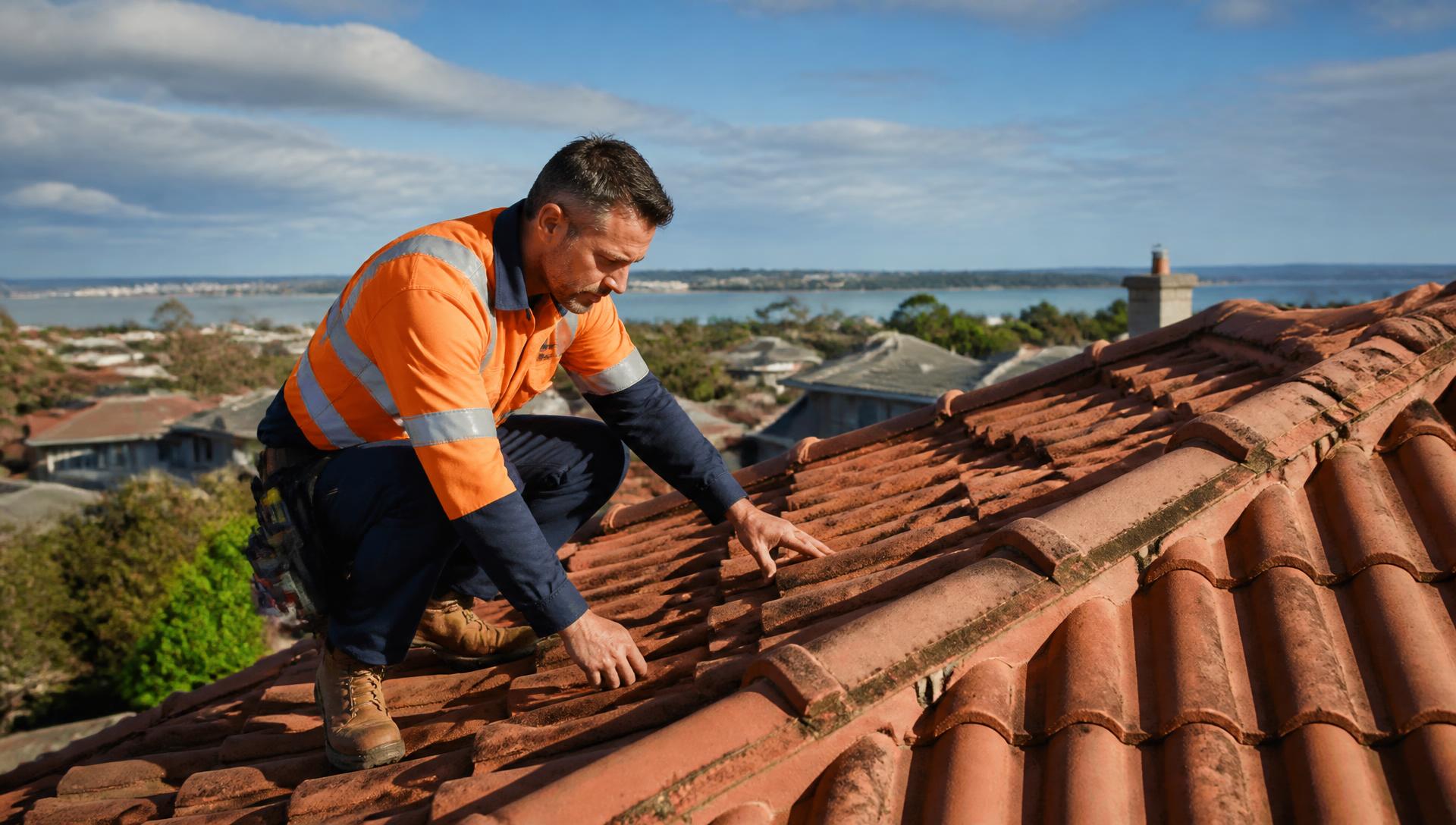
Salt off Corio Bay, hard UV and sharp overnight swings give Geelong roofs their own failure pattern. Understanding it explains what your roofer is looking at.
Roofing advice written for Melbourne is broadly useful in Geelong, but it misses the details that matter most here. The combination of conditions along the bay produces a recognisable pattern of failure, and it is the reason two houses of the same age in different suburbs can be in very different condition.
Salt carried on the westerly
Wind crossing Corio Bay carries salt inland. It settles on roof sheeting, in lap joints, around cut edges and in gutters. Salt holds moisture against metal and accelerates corrosion, particularly at any point where the protective coating has been cut or drilled. Homes in Rippleside, Drumcondra and the bayside edge of Geelong West show this earliest, but it reaches well inland.
Hard summer UV on exposed planes
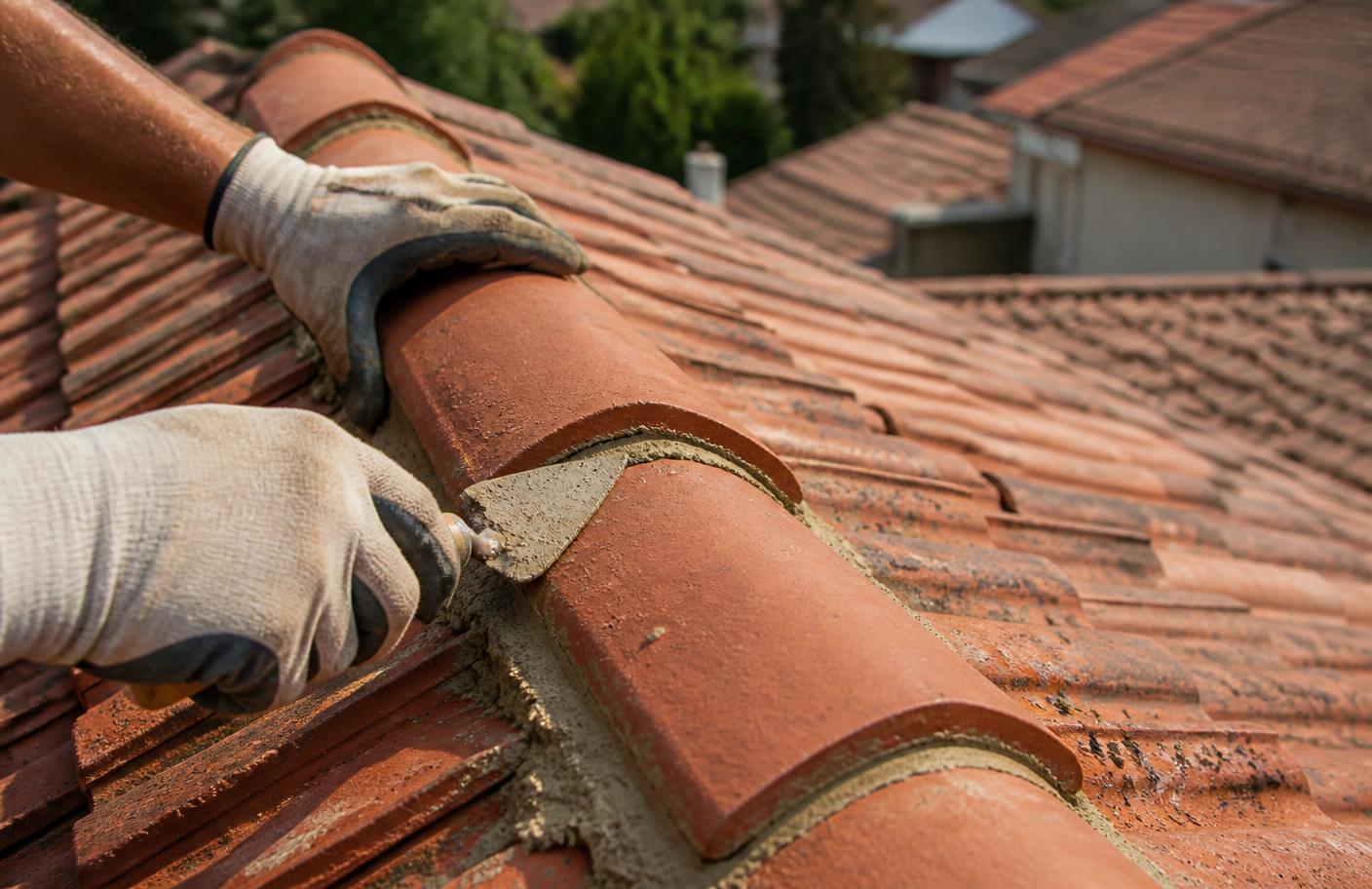
North and west-facing roof planes take punishing sun through summer. UV degrades coatings, perishes neoprene washers around screw fixings and dries out mortar. On a roof with limited tree cover, the difference in condition between the north and south planes can be dramatic.
Damp, shaded winters
South-facing planes have the opposite problem. They stay wet for extended periods in winter, which is where moss, lichen and organic growth establish. Growth holds moisture against the tile surface and, on porous concrete tile, accelerates deterioration.
Sharp overnight temperature swings
Hot days followed by cool nights work rigid materials constantly. Mortar bedding cracks, metal expands and contracts around fixings, and small movements over decades loosen things that were originally solid.
Storm and hail season adds a fourth stress on top of the other three
Salt, UV and damp winters work slowly, wearing a roof down over years. Storm season works quickly, and it exploits whatever the slow processes have already weakened. A ridge that has lost some of its bedding to years of thermal movement is far more likely to lose a cap in a wind event than one that was repointed recently. A valley iron already thinned by corrosion is more likely to split under the volume of water a heavy storm sends down it. This is why storm damage in Geelong rarely looks random when you understand the roof's history — it tends to find the point that was already closest to failing.
Ground-observable signs each failure mode produces
Salt corrosion on metal roofing shows first as fine rust lines at cut edges, screw fixings and lap joints, visible with binoculars from the ground well before a hole develops. UV damage shows as chalky, faded coating on north and west-facing planes and as brittle, cracking washers around exposed fixings. Winter damp and organic growth show as dark green or black patches on south-facing tile, usually starting in the more shaded corners of a roof near trees or adjoining walls. Thermal cracking in mortar bedding is harder to see from the ground but often shows indirectly as small mortar fragments accumulating in the gutters below the ridge and hips. Recognising which pattern you are looking at gives a useful clue as to what is actually failing, even before an inspection.
Distance from the bay changes the rate, not the risk
Homes right along the bayside edge, through Rippleside and the northern parts of Geelong West, see the fastest salt-driven corrosion because they take the westerly wind directly. Move further inland through Herne Hill, Newtown and Highton and the same corrosion still occurs, just more slowly, which means it is easy to assume an inland property is exempt from it. It is not — it is simply on a longer timeline, and a roof that has never been checked for this specifically can have more advanced corrosion than the owner expects by the time any sign becomes visible from the ground.
Why age alone does not predict condition
Two roofs of the same age in the same suburb can be in very different condition depending on orientation, tree cover and whether previous repairs addressed the cause or just the symptom. A roof shaded by mature trees on its southern side will hold moisture and grow organic matter faster than an identical roof with no overhanging cover, regardless of how old either one is. A roof that has had ridge capping reset without repointing the bedding underneath will show the same fault reappear within a few years, while a properly repointed equivalent will not. This is why a roof's age is only a starting point for assessing it, not a reliable measure on its own.
The housing stock amplifies it
Geelong has three broad generations of roof. Edwardian and interwar homes through Geelong West and Newtown carry original terracotta on bedding mortar laid before flexible pointing existed. Postwar brick homes through East Geelong, Belmont and Thomson mostly have concrete tile with surface-applied colour that has long since worn back. Later homes and re-roofs have metal sheeting of varying ages and coating quality.
What this means for repairs
The same defects turn up again and again: failed ridge pointing, rusted valley irons under tile, perished washers on metal roofs, corrosion starting at cut edges, and porous concrete tile that absorbs rather than sheds. A roofer who works here constantly knows where to look first, which is why our inspections start with the bedding, the valleys and the cut edges rather than with the middle of the roof plane.
Why generic advice falls short
Advice that assumes an inland climate underestimates salt corrosion. Advice written for a drier region underestimates winter moss. Both will tell you to look at the roof surface, when in Geelong the most informative places are the details around the edges — valleys, flashings, ridges and cut edges.
What a Geelong-specific inspection actually checks
An inspection that accounts for local conditions does not simply walk the roof and note broken tiles. It checks cut edges and fixings on metal roofing for early corrosion, checks ridge and hip bedding for the fine cracking that thermal cycling produces, checks south-facing planes for moisture-holding growth, and checks valleys and flashings — the places where water is concentrated and where failure has the most consequence. On older terracotta and concrete tile roofs it also considers how much useful life the bedding has left, since that changes whether a specific repair is a lasting fix or a short-term one. This is the difference between an inspection that lists symptoms and one that explains causes.
Why the fix has to match the actual cause
Treating the wrong failure mode wastes money and delays a real fix. Repainting a chalky, UV-faded metal roof does nothing for corrosion already established at the cut edges underneath. Resetting a handful of moss-affected tiles without addressing the shade and drainage that let the growth establish means the same patch returns within a season or two. A repair scoped to the actual cause — corrosion, thermal cracking, organic growth, or wind lift — holds for years. A repair scoped only to the visible symptom often needs revisiting well before it should.
When these patterns are worth acting on
None of these failure modes require immediate action the moment they are noticed, but all of them get more expensive to address the longer they run unchecked. Fine surface corrosion at a cut edge is a minor treatment now and a sheet replacement later. A few cracked mortar joints along a ridge are a repointing job now and a fully reset ridge line later. Once any of these signs are visible from the ground, it is worth having them looked at properly rather than waiting for the next stage.
If you want to know which of these patterns your own roof is showing, we will come out, inspect it and show you the photographs.
Frequently Asked Questions
Does salt air really affect roofs several kilometres from the bay?
Yes. Salt carried on westerly wind settles well inland, and once it sits in lap joints and around cut edges it noticeably accelerates corrosion compared with equivalent roofs further from the water.
Why is one side of my roof in much worse condition than the other?
Aspect. North and west planes take the UV load and degrade coatings and washers. South planes stay damp in winter and grow moss and lichen. It is normal for the two sides of the same roof to age at very different rates.
Is moss on my roof actually a problem?
It can be. Moss holds moisture against the surface, and on porous concrete tile that accelerates deterioration. It also blocks water paths in valleys and gutters.
Do older Geelong terracotta roofs need different treatment?
They need more care with profile matching and with the bedding mortar, which on pre-war homes was laid before flexible pointing compounds existed. The tiles themselves are often still sound.