What Happens During a Free Roof Inspection
By The Roof Repair Geelong Team · 1 September 2026 · faqs
Step by step through a Roof Repair Geelong inspection — what we check, what you get afterwards, and why nothing is quoted before it is photographed.
A free inspection sounds like a sales visit, and in some trades it is. Ours is a diagnostic process with a written output, and knowing what it involves makes it easier to judge whether any roofer is doing it properly.
Before we arrive
We ask what you have noticed and when — a stain, a drip, missing tiles after wind, a roof that just looks tired. That shapes where we start. We book a time that suits you and we turn up in it.
The conversation on the ground first
We start by asking what the house has done before: previous repairs, how old the roof is if you know, whether the problem is seasonal, and where inside the water shows. Homeowners routinely hold the most useful piece of information in the whole inspection.
The roof space
Where access allows, we go into the roof cavity with a torch. This is where the evidence lives: tide marks on sarking, staining on timber, wet insulation, daylight through a penetration. Leaks are traced from here back toward the entry point rather than guessed at from above.
The roof surface
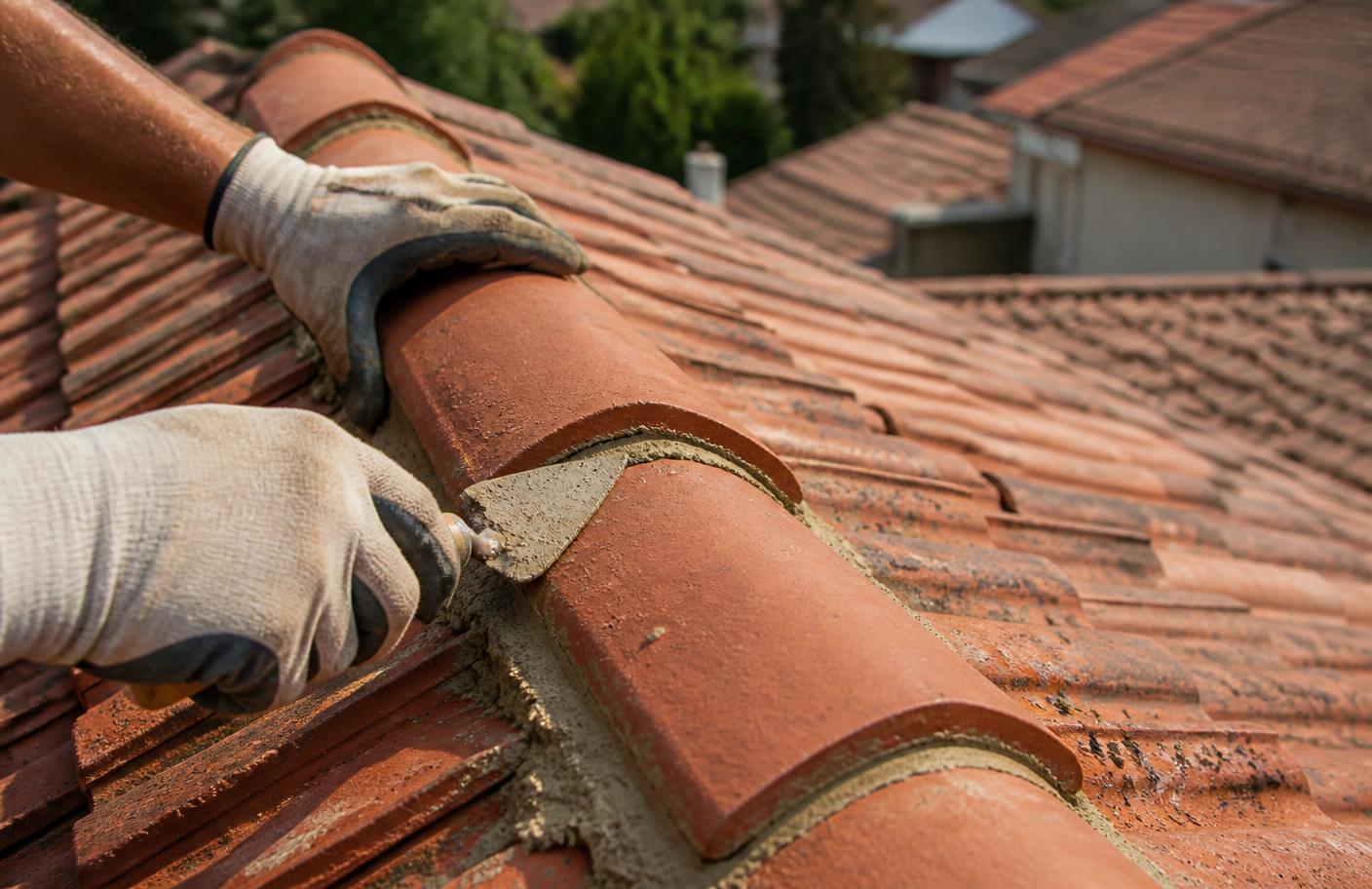
Where it is safe to do so, we get on the roof. We check ridge and hip bedding and pointing, valley irons, flashings around chimneys, skylights and penetrations, tile condition and breakages, sheet condition, fixings and washers, and the state of every gutter run and downpipe.
Why Geelong conditions shape what we check first
An inspection here is not a generic checklist. Salt carried inland off Corio Bay means we pay particular attention to cut edges, fixings and lap joints on metal roofing, since that is where corrosion establishes first and earliest, often well before it is visible from the ground. Hard summer UV means we check the condition of coatings and washers on north and west-facing planes, which take the most direct sun through the day. Damp, shaded winters mean south-facing tile gets checked for moss and organic growth that holds moisture against the surface. None of this is optional extra work — it is what makes an inspection accurate for a roof that has actually spent years exposed to Geelong's weather rather than a generic climate.
What we commonly find on each roof type
On postwar concrete tile roofs, common through Belmont, Thomson and East Geelong, the most frequent finding is bedding and pointing along ridges and hips that has reached the end of its working life well before the tiles themselves need replacing. On Edwardian and interwar terracotta through Geelong West and Newtown, the same bedding issue applies, with the added complication of matching older tile profiles if any need replacing. On Colorbond and other metal re-roofs, the most common finding is fixings and flashings that were installed adequately but are now showing early corrosion at cut edges, along with the occasional short-cut in flashing detail from the original installation that only becomes visible once someone is up close.
Photographs of everything
Every defect we intend to quote on gets photographed. This is not optional in our process. It means the quote you read later describes things you have already seen with your own eyes, on the ground, with us explaining what each image shows.
The conversation afterwards
We walk you through the photographs, explain what is causing the problem rather than just naming the symptom, and tell you what is urgent, what can wait and what does not need doing at all. If your roof is fine, we say so — that outcome happens regularly.
The written quote
You receive an itemised, fixed-price quote covering the scope discussed, with exclusions stated and an explanation of how any hidden damage would be handled. There is no obligation attached to it, and it does not expire in twenty-four hours.
What it costs
Nothing. There is no call-out fee and no travel charge anywhere inside our Geelong service area, and that applies whether you go ahead with the work or not.
How long it takes
Most single-storey homes take thirty to forty-five minutes on site. Larger or double-storey properties take longer. You do not need to be on the roof or in the roof space at any point — that is our job.
What we look for that isn't obvious from the ground
Some of the most consequential defects are essentially invisible until someone is either in the roof space or standing on the roof itself. Hairline cracking in ridge bedding, a fine corrosion line at a cut edge, a washer gone brittle around a fixing, or sarking that has been damp for long enough to show tide marks but not yet long enough to sag — none of these show up in a photo taken from the street or even from a drone flyover. This is the main reason we physically get onto the roof and into the roof cavity wherever it is safe to do so, rather than relying on what can be seen from below.
When to book sooner rather than later
Some signs are worth acting on without waiting: a stain that is growing rather than static, water appearing during rain rather than just after it, missing tiles or lifted sheet edges after wind, or mortar fragments turning up in the gutters. Others are worth keeping an eye on rather than treating as urgent — light surface fading, a small amount of moss on a shaded plane, or a roof simply looking tired with age. If you are not sure which category your roof falls into, that uncertainty is itself a reasonable reason to book an inspection, since telling the two apart is exactly what the inspection is for.
Why the free inspection is thorough rather than a quick look
A brief walk around the outside of a house tells you very little about roof condition, which is why our process goes further: into the roof space with a torch, onto the roof surface where it is safe, and through every junction where water concentrates. This takes time, but it is what allows the quote that follows to be both fixed and accurate, rather than a rough figure that gets revised once work actually starts.
What happens if we find nothing wrong
Not every inspection ends with a list of repairs. Where a roof is sound, we say so plainly, explain what we checked and why it holds up, and there is no pressure to find work that is not needed. A clean inspection is still a useful outcome — it tells you the roof does not need attention yet and gives you a baseline for comparison next time.
Preparing for the visit
There is little you need to do beforehand. Clear access to the roof space if it is through a cupboard or a tight manhole, and have any relevant history to hand — a previous repair invoice, or roughly when the roof was last worked on. Everything else, from getting on the roof to tracing a leak back to its source, is handled on the day.
After the inspection, the decision is yours
Receiving a written quote does not commit you to anything. You can take time to consider it, get a second opinion, or simply file it away for when you are ready. There is no follow-up pressure attached to a free on-site inspection and a written fixed-price quote — the information is yours to use whenever suits you.
If your roof has been bothering you, book one. Worst case, you find out it is fine.
Frequently Asked Questions
Is the roof inspection really free?
Yes. There is no call-out fee and no travel charge anywhere inside our Geelong service area, whether or not you proceed with any work.
Do I need to be home for the inspection?
It helps, because you can tell us what you have noticed and we can walk you through the photographs on the ground afterwards. If you cannot be there, we can send the photographs and quote through and talk it over by phone.
Will you go into my roof space?
Where there is safe access, yes. The roof cavity holds the evidence of where water has actually been travelling, which the roof surface alone does not show.
What if my roof turns out to be fine?
Then we tell you that and there is nothing to pay. It happens regularly and it is a perfectly good outcome for an inspection.