Ridge Capping and Repointing Explained
By The Roof Repair Geelong Team · 28 July 2026 · how to
Bedding, pointing, ridge caps — the three terms roofers use interchangeably that actually mean different things, and why the distinction changes your quote.
If you have had a roofer mention repointing, you have probably also heard bedding and ridge capping used in the same breath. They are three distinct things, and understanding the difference is the quickest way to tell whether a quote makes sense.
The three parts
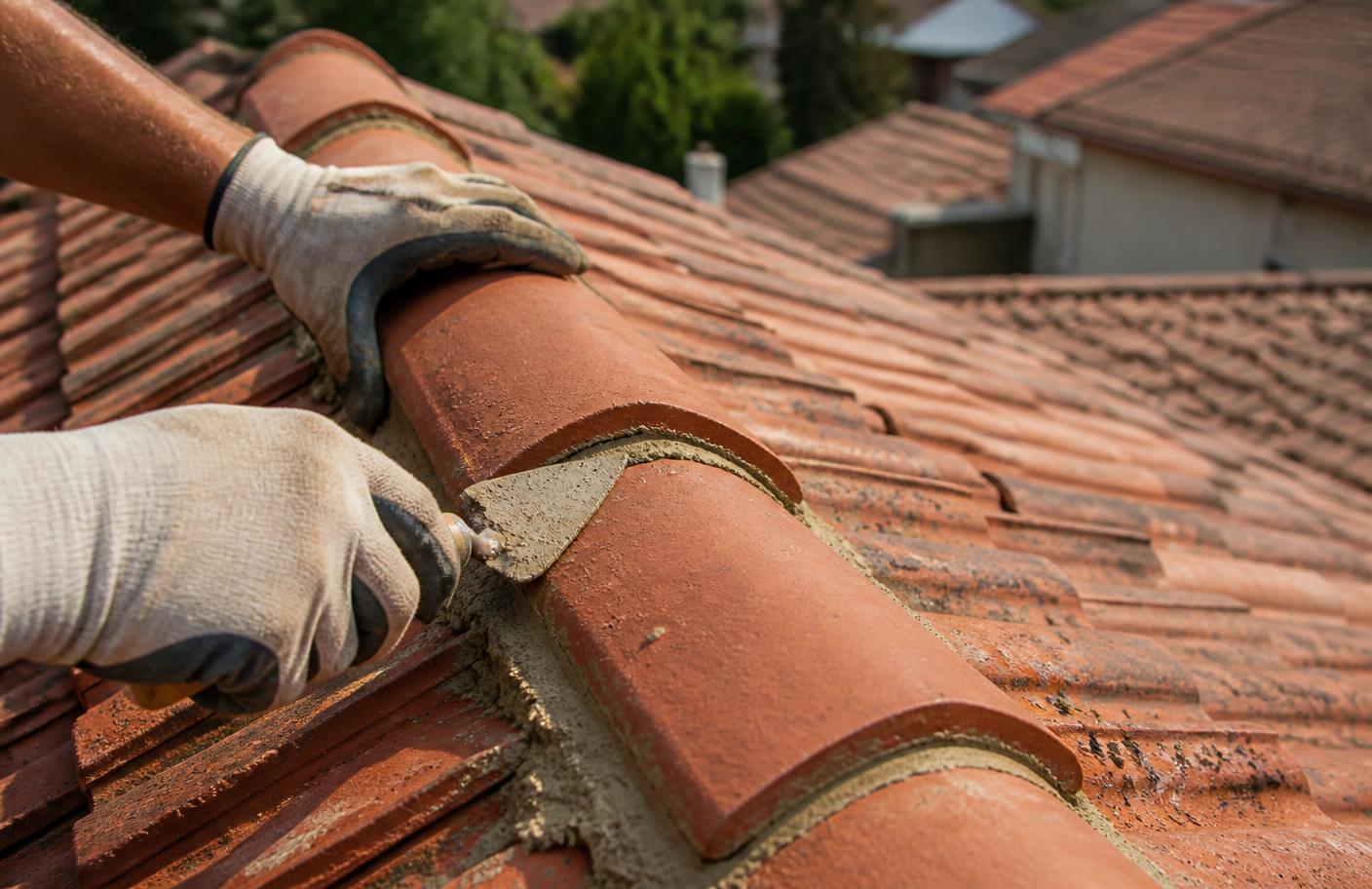
Ridge caps are the curved or angled tiles that sit over the join where two roof planes meet, along the ridge and down the hips. Bedding is the mortar bed underneath those caps that holds them in position and takes their weight. Pointing is the flexible compound applied over the outside of the bedding to seal and weatherproof it.
How the system fails
Pointing goes first. It is the exposed layer, and decades of UV and temperature movement crack it. Once cracked, water gets behind it and into the bedding. The bedding — which is rigid cement mortar on older Geelong roofs — then starts to break down, lose strength and crumble. Eventually the cap itself is no longer held firmly, and a windy night takes it off the roof.
What repointing involves
Repointing is the right repair when the bedding underneath is still sound. The old pointing is removed, the surface prepared, and a flexible pointing compound applied over the existing bedding. It is a considerably smaller job than rebedding and it restores the weather seal.
What rebedding involves
Rebedding means lifting the ridge caps off, removing the failed mortar bed, laying a fresh bed, resetting the caps and then pointing over the top. It is significantly more work because every cap comes off and goes back on. It is necessary when the bedding has crumbled rather than just cracked.
How to tell which you need
You cannot tell reliably from the ground, but there are indicators. Mortar fragments in the gutter mean the pointing has already failed and material is washing off. A cap that visibly rocks or sits proud means the bedding is gone under it. Where a handful of caps are loose but most are firm, a partial rebed plus full repoint is often the sensible answer.
Why this matters on Geelong roofs
Pre-war and interwar homes across Geelong West, Newtown and Manifold Heights were bedded with rigid cement mortar, before flexible pointing compounds were available. Those roofs have had decades of thermal movement working against a material that cannot flex. Failed pointing on a Geelong roof of that era is normal rather than exceptional.
What to ask for in the quote
Ask whether the quote is for repointing only, rebedding only, or both, and on how many metres. Ask whether it covers the ridge alone or the hips as well. Ask for photographs of the bedding condition under a lifted cap — that is the evidence that determines which job you actually need.
What weather does to bedding and pointing in Geelong
Geelong's roofs sit under a combination that is harder on ridge bedding than most inland towns experience. Salt-laden wind off Corio Bay carries fine airborne salt well inland through Rippleside, Drumcondra and North Geelong, and that salt works its way into any crack in the pointing, accelerating the breakdown of the mortar bed underneath. Summer adds another layer: long stretches of harsh UV and heat that bake the pointing compound, drying it out and making it brittle faster than a cooler climate would. Winter then delivers sustained damp and repeated wetting, which is exactly when a compromised bed absorbs water and starts to soften. The freeze-thaw cycle that damages roofs in colder parts of the country is not the main issue here — it is this UV-baked, salt-assisted, wet-dry cycling that does the damage, and it repeats every single year.
Storm season and wind uplift
Ridge capping failure in Geelong rarely happens on a calm day. It shows up during the spring and early summer storm season, when a gusty north-westerly or a squally cold front puts sudden uplift pressure on caps that are already sitting loose on failed bedding. A cap that has been quietly rocking for a year with no visible symptom from the ground can come off in a single evening once the wind gets underneath it. This is why we treat any report of a rattling or ticking sound from the roof during wind as worth investigating rather than dismissing, and why an inspection after a significant storm is worthwhile even if nothing appears to have moved.
Materials comparison: cement mortar versus flexible pointing
Older Geelong roofs were bedded with a rigid cement-based mortar, both underneath the caps and as the visible pointing layer. That approach worked reasonably well for a while, but rigid mortar has no capacity to move with the roof, and every roof moves slightly with heat, cold and structural settling. Modern flexible pointing compounds are designed specifically to accommodate that movement while still shedding water, which is why a repoint using a modern product tends to last considerably longer than the original cement pointing it replaces. The bedding underneath is still typically a cement-based product because it needs to bear the weight of the cap, but the outer pointing layer benefits enormously from the newer flexible compounds. Understanding this distinction helps explain why a repoint is not simply "the same job done again" — it is an upgrade in material as well as a repair.
Common failure modes we see
- Hairline cracking along the full length of a ridge, visible as a fine dark line once you know to look for it
- Pointing that has separated cleanly from the tile surface on one side, leaving a gap you can slide a fingernail into
- Whole sections of pointing missing after storms, with bare mortar bedding exposed to the weather
- Caps sitting slightly askew or out of alignment along a hip, indicating movement in the bed beneath
- Efflorescence — a white, chalky residue on the bedding — which signals water has been moving through the mortar
What we check during a ridge inspection
A proper inspection is not a walk past with binoculars. We get onto the roof and go along every ridge and hip by hand, checking each cap for movement, tapping the pointing to listen for hollow sections, and photographing any bedding exposed by missing pointing. We also check the roof space from underneath at the ridge line where accessible, because water tracking through failed bedding sometimes shows as staining on the underside of the ridge board or on sarking before it is obvious from outside. On tile roofs with a history of previous patch repairs, we look specifically at where old and new pointing meet, since that junction is a common place for fresh cracking to start.
Maintenance expectations after a repoint or rebed
Once repointing or rebedding is complete, the ridge line should not need attention again for a long stretch of years, but it is not a lifetime fix on its own. We recommend a visual check after any severe storm, and a proper inspection roughly every few years so that early hairline cracking is caught and touched up before it becomes a bedding failure. Gutters are worth checking too — mortar fragments appearing in the gutter after a repoint has been done recently is unusual and worth a follow-up call, whereas fragments appearing years later is a normal sign that it is time to reassess the ridge.
When to call a roofer rather than wait
Loose or missing caps after a storm, mortar debris in the gutters or on the ground below the roof, visible daylight or gaps along a ridge from inside a roof space, or a persistent ceiling stain near a ridge line are all reasons to get someone up there sooner rather than later. Leaving a cracked pointing job through another wet winter rarely improves the outcome and often turns a repoint into a rebed.
Our repointing and rebedding quotes state the linear metres, the ridges and hips included, and the condition we found under the caps. If your bedding is sound, we will quote the smaller job and say so.
Frequently Asked Questions
What is the difference between repointing and rebedding?
Repointing renews the flexible seal over an existing sound mortar bed. Rebedding removes and relays the mortar bed underneath the ridge caps, which means lifting and resetting every cap. Rebedding is substantially more work.
How do I know my pointing has failed?
The clearest ground-level sign is grey mortar fragments collecting in your gutters or on the ground below the ridge line. Visible cracking along the ridge is another.
Can failed pointing cause a leak?
Yes. Once water gets behind the pointing it soaks the bedding and can track into the roof space. It also degrades the bedding, which eventually loosens the caps.
Do hips need repointing as well as the main ridge?
Usually yes. Hips are exposed to the same weather and fail in the same way, so a quote that covers only the main ridge may be leaving half the work out.